Car & vehicle insurance
Commercial auto and van insurance
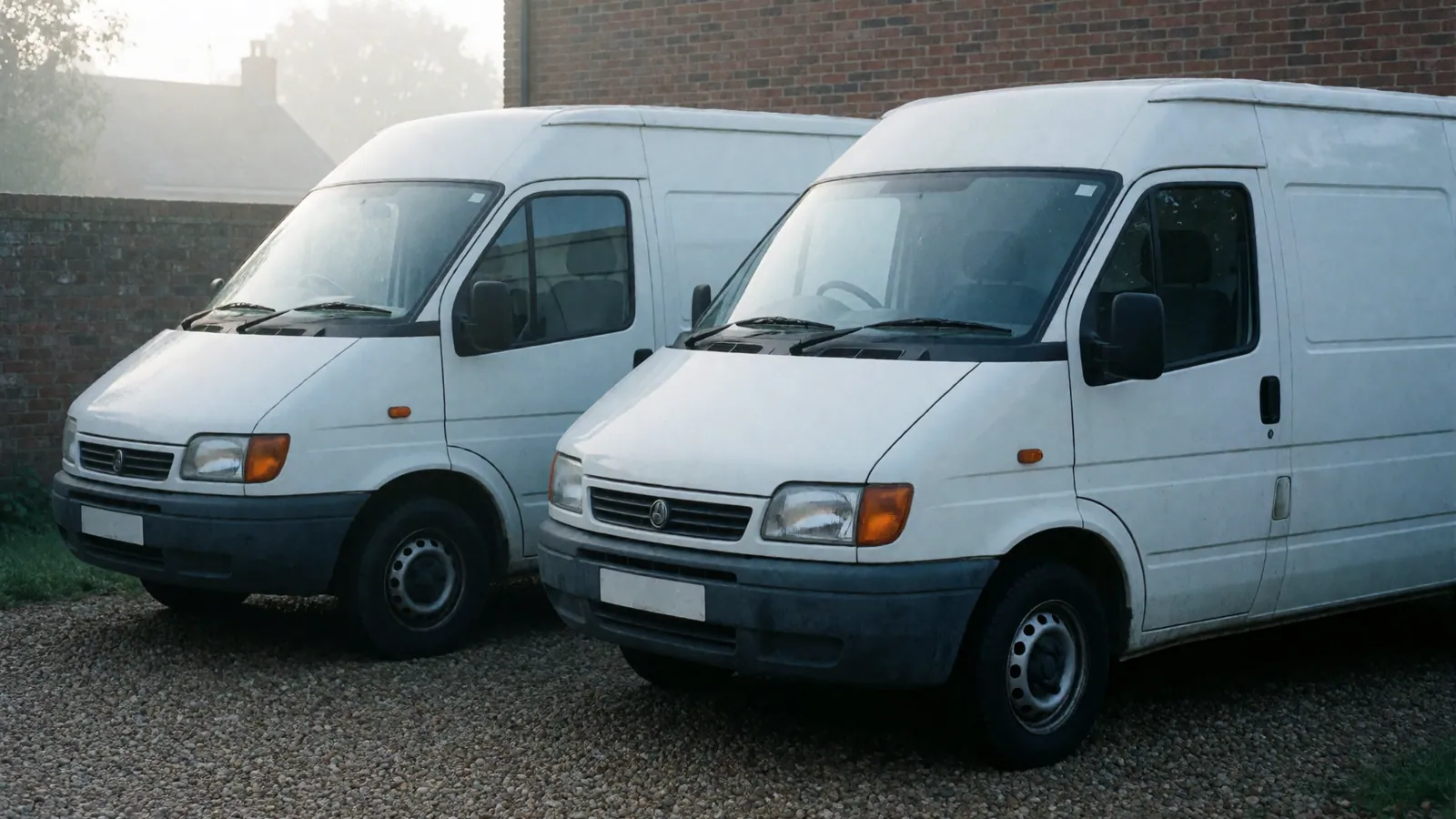
The moment a vehicle earns money it stops being a personal auto — and a personal policy will decline the claim on precisely that ground. This is the most expensive misunderstanding in small business insurance, and it is entirely avoidable.
Personal auto policies contain a business-use exclusion. It is not obscure and it is not buried; it is one of the first things an adjuster checks when a van with a ladder rack has an accident on a Tuesday morning. If the vehicle is being used in your trade or business, the personal policy is entitled to walk away, and the repair, the injury claim and the defence all become yours.
Commercial auto exists to cover exactly that use. It costs more, because a vehicle driven all day for money is a genuinely bigger risk than one driven to a station and back. What it buys is a claim that gets paid and a defence that gets provided, which is the entire point of the exercise.
Where the line actually falls
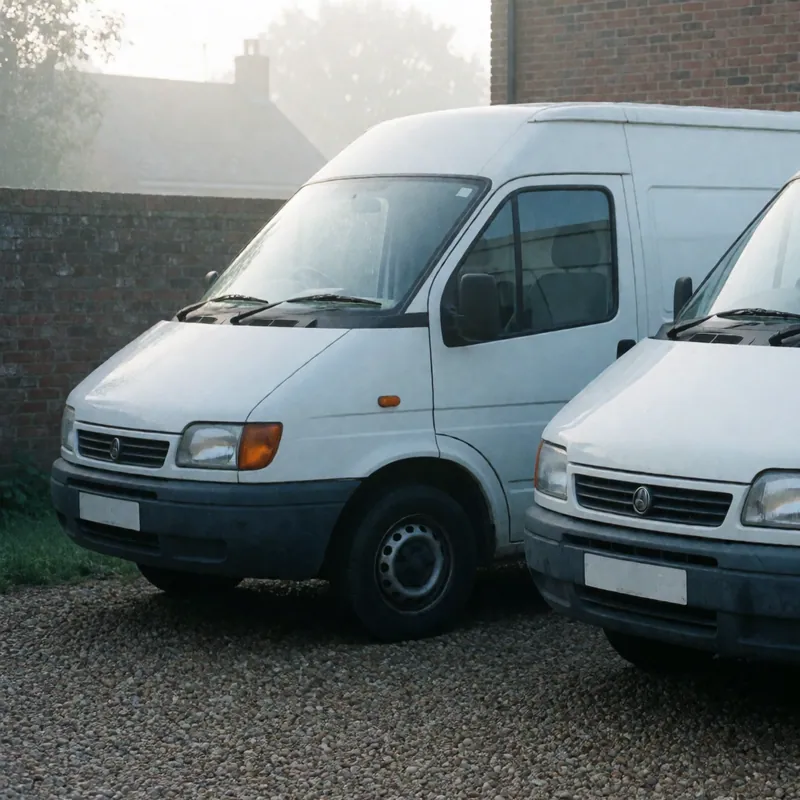
Commuting to a fixed workplace in your own car is personal use, and stays personal. Carrying tools and materials to job sites, making deliveries, transporting customers, or driving a vehicle registered to a business is commercial use, and needs a commercial policy.
The grey middle is real: a contractor whose pickup is also the family car, an accountant who drives to three clients a week. Some carriers will write a personal policy with a business-use endorsement for the lighter end of that. The important thing is that the carrier is told, in writing, what the vehicle is actually doing — because the exclusion bites on the facts, not on the intention.
Hired and non-owned, which almost everybody needs
If any employee ever drives their own car on your business — the shop assistant who fetches supplies, the office manager who goes to the bank — your business can be sued for what happens, and your commercial auto policy does not cover a vehicle you do not own. Hired and non-owned auto liability covers that gap, and it is inexpensive.
The same applies to rented vehicles. A van hired for a fortnight is not on your schedule, and the counter's own damage waiver is not liability cover for injuring somebody. If your business ever rents a vehicle or sends anybody anywhere in their own car, this endorsement belongs on your policy.
How commercial vehicles are rated
By vehicle weight class and body type, by radius of operation, by what is carried, and by the motor vehicle records of everybody who drives. Local delivery within the five boroughs rates differently from long-haul, and a vehicle carrying hazardous or valuable cargo differently again.
The driver list is where small businesses lose the most money. An unlisted driver with a poor record found at claim time is the classic commercial auto dispute, and adding somebody costs a fraction of what arguing about them does. Tell us everybody who has keys, including the owner's family and the person who moves vehicles around the yard.
Tools, cargo and what the auto policy will not pay
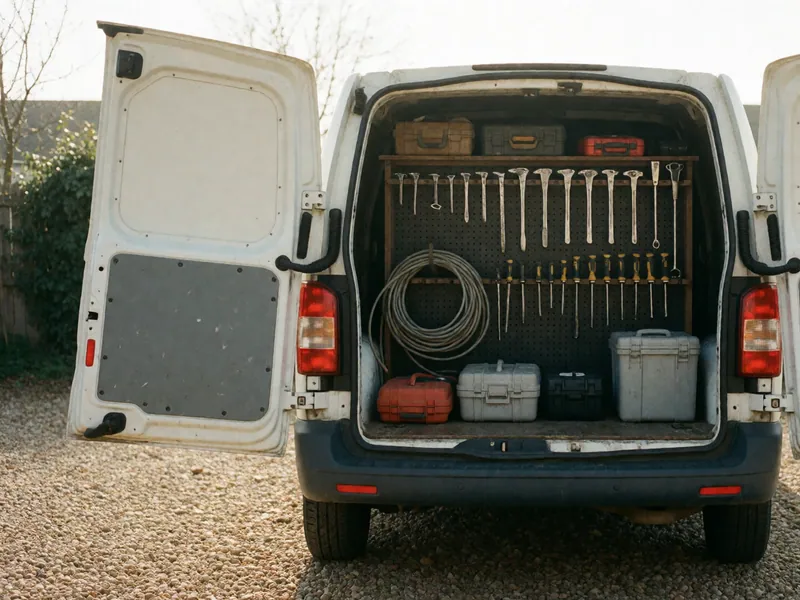
The commercial auto policy covers the vehicle and the liability. It does not cover the tools in the back — that is inland marine, usually written as a contractors equipment or tools floater — and it does not cover the goods you are carrying, which is motor truck cargo cover.
This is the single most common gap we find on Queens trade vans: full commercial auto, correctly written, on a vehicle carrying eleven thousand dollars of uninsured tools. The floater costs a few hundred a year and pays out on the theft that actually happens rather than the crash that mostly does not.
A certificate reports cover; it does not create any. A certificate of insurance is evidence, not cover. It is a snapshot of what was in force on the day it printed, it confers no rights on the person holding it, and it does not amend the policy. If your contract needs somebody named as an additional insured, or needs a waiver of subrogation, that comes from an endorsement on the policy — which costs something, has to be requested, and is the only thing that actually changes what is covered. We will not issue a certificate describing cover that has not been endorsed, however urgently the general contractor wants it.
Included as standard
How we handle this line
Use described accurately to the carrier
In writing, at application, so that the business-use exclusion cannot be pointed at you later.
Every driver listed
Including the owner's household and whoever moves vehicles in the yard. Unlisted drivers are the classic commercial auto dispute.
Hired and non-owned quoted as standard
Because almost every business has somebody driving their own car on its behalf at some point.
A tools floater priced beside it
The auto policy does not cover what is in the back. We quote the inland marine cover in the same proposal rather than leaving the gap.
Certificates same-day
Additional insured endorsements arranged where a contract genuinely requires them, and never described on a certificate before they exist.
Fleet credits where they apply
Above a handful of vehicles the rating changes shape. We will tell you where that threshold sits for your carrier.
When to ring us
Signs this is worth a conversation
- You carry tools, stock or materials in a vehicle insured on a personal policy.
- Your vehicle is registered in the business name but insured personally.
- Employees run errands in their own cars and there is no hired and non-owned cover.
- A general contractor or landlord has asked for a certificate showing commercial auto.
- You have several thousand dollars of tools riding around uninsured.
- You have added vehicles or drivers since the policy was written and not told anybody.
Commercial auto — what it typically costs
- Typical annual premium per vehicle for a local trade or delivery use, before any fleet credit.$3,200 – $8,400
This is a typical premium range for this area. It is not a quote, and it is not our price. We do not set premiums: a carrier files its rates with the Department of Financial Services and our commission is already inside the filed rate, so the same policy from the same carrier costs the same through any producer in New York. What genuinely moves your own number is which carrier writes it, the limits and deductibles you choose, and the facts on your record — which is what we would go through with you before anything is quoted.
Questions we are actually asked
Commercial auto — frequently asked
Will my personal auto policy cover business use?
Generally not. Personal auto policies exclude business use, and it is one of the first things checked when a work vehicle has a loss. Some carriers will endorse light business use onto a personal policy; anything beyond that needs commercial auto. The deciding factor is what the vehicle is actually doing, not what you intended.
How much is commercial auto insurance in Queens?
Typically $3,200 to $8,400 per vehicle per year for local trade or delivery use, before fleet credits. It moves with weight class, radius, cargo and — heavily — the motor vehicle records of the people driving.
Do I need commercial auto if I only use my van for work sometimes?
Probably, and it depends where on the spectrum you sit. Occasional light business use can sometimes be endorsed onto a personal policy; carrying tools and materials to job sites cannot. Describe the real pattern to us and we will tell you honestly which side of the line you are on — including when the answer is the cheaper one.
Are my tools covered in the van?
Not by the auto policy. Tools and equipment need a contractors equipment or tools floater, which is inland marine cover written separately. This is the most common uninsured exposure we find on trade vehicles in this area.
Related cover
Usually considered alongside this
Contractors insurance
Liability, tools, the vehicle and the certificate the general contractor wants by Friday — plus New York Labour Law 240, which changes the arithmetic entirely.
$1,800 – $9,500
Business insurance
The businessowners policy that covers most small Queens businesses properly, and the four risks it is famous for leaving out.
$800 – $2,800
Workers comp
Compulsory in New York from the first employee, with almost no exceptions and a penalty regime that does not care whether you knew.
$0.30 – $18
Rideshare & livery
The gap between your personal policy and the platform's, what the TLC actually requires, and why the two do not meet in the middle by themselves.
$5,400 – $14,000Bring the declarations page and we will read it with you
Ask us what it would cost
Send or bring the summary pages of what you already have — those two sheets are where most of the useful conversation is. We will tell you what we would place it with and what that would cost, what we are paid for doing it, and whether you should move at all. Quite often the answer is that your current policy is priced fairly and you should keep it, and that is an answer we give in writing like any other.